
Reading excerpts
Excerpts from Where Did the Ark of the Covenant Go?
Read two English excerpts: Jerusalem and Bethlehem in November 1947, and a secret excavation in Jerusalem in April 1911.
Back to the stories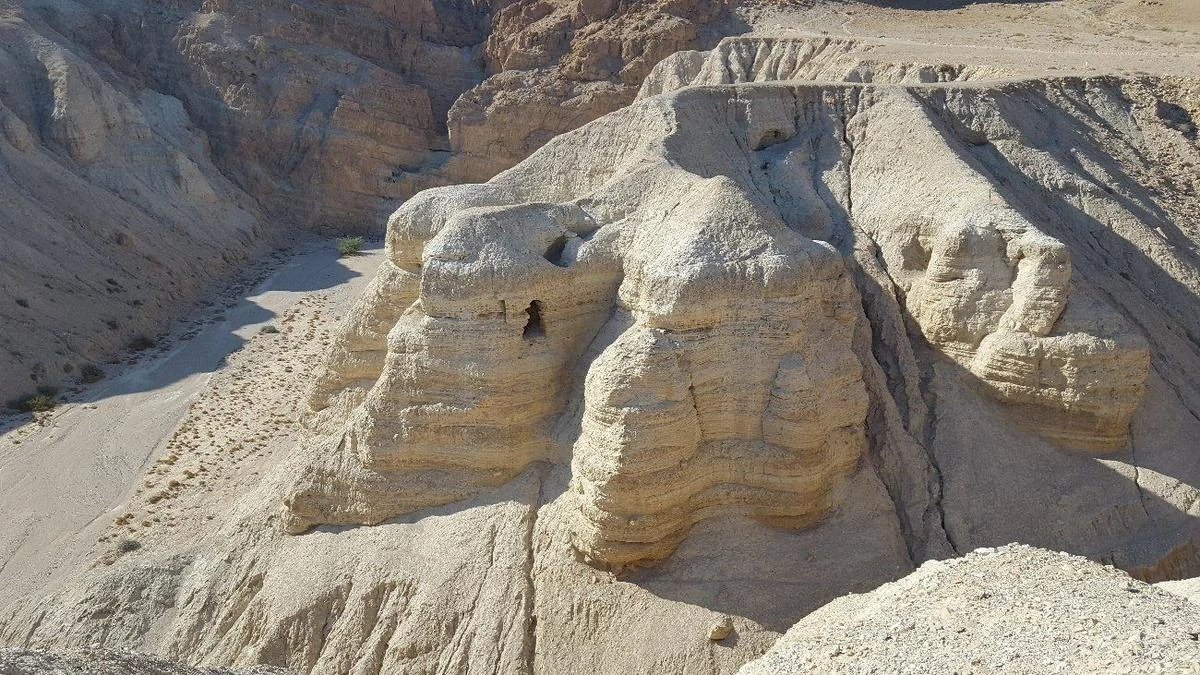
These excerpts are English translations prepared for this website. The current book is in Hebrew.
From the introduction
Jerusalem and Bethlehem, November 1947
In Jerusalem in November 1947, even arranging a meeting took planning. Barbed wire and checkpoints divided the city, and tensions between Jews and Arabs rose by the day. Salahi sent an Armenian intermediary to Sukenik: Levon Ohan, son of the veteran antiquities dealer Nasri Ohan, who knew the professor.
They met near Jaffa Gate, one on either side of a barbed-wire fence. Ohan held up a scrap of leather, and Sukenik brought his face as close to the wire as he could. He knew those letterforms. He had seen them cut into stone on the small boxes in which people in the Second Temple period gathered the bones of their dead, in tombs he had excavated in and around Jerusalem. But this was no stone. It was the very same script, in ink on leather.
Two days later Sukenik obtained permission from the British army to pass the checkpoint and entered Ohan’s shop. Bent over a few more fragments, he could see the resemblance more clearly still. But fragments were not enough. He wanted to see a whole sheet, and there was only one place that had whole sheets: Bethlehem, an Arab city in the middle of a storm.8
His wife did not want him to go. His son, Yigael Yadin, was then an archaeology student and a member of the Haganah. The archaeologist in him understood what his father might miss. The Haganah man knew exactly what could happen to him on the road. When his father asked what he thought, Yadin did not know what to say. Later he recalled that he simply kept silent.
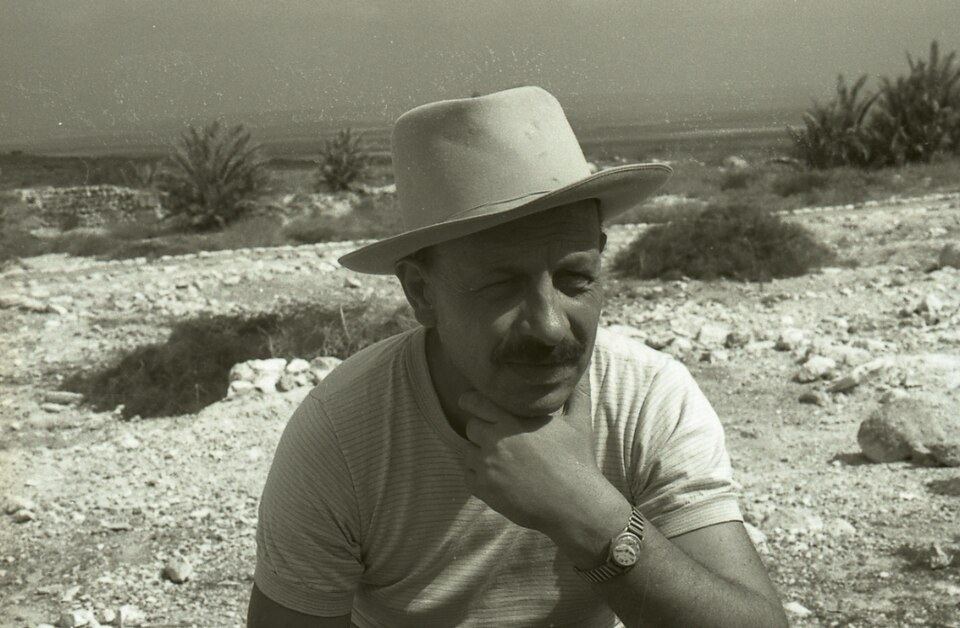
Sukenik decided to go.8
On 29 November he boarded a bus to Bethlehem, with Ohan beside him. This time he told no one. Only later did Ohan admit that he had feared for his friend’s life the whole way and felt responsible for whatever might happen to him. In Bethlehem they went to Salahi’s house and climbed to the attic.8
Their host showed them two clay jars in which, the Bedouin said, the scrolls had been found. Then he set several bundles of leather in front of Sukenik. Until then he had seen only fragments. Now he had a whole bundle before him. If the leather did not crumble between his fingers, he might be able to read a line from beginning to end.
“My hands shook as I began unrolling one of them,” he wrote later in his diary.9
Sentences in biblical Hebrew appeared on the sheet. He read one line and went back to the beginning. It sounded like a psalm, but he had never heard this one. Sukenik had spent years excavating Second Temple Jerusalem. He knew it from stones, tombs and broken pottery. Now, for the first time, he held in his hands words written by someone who had lived in those days.9
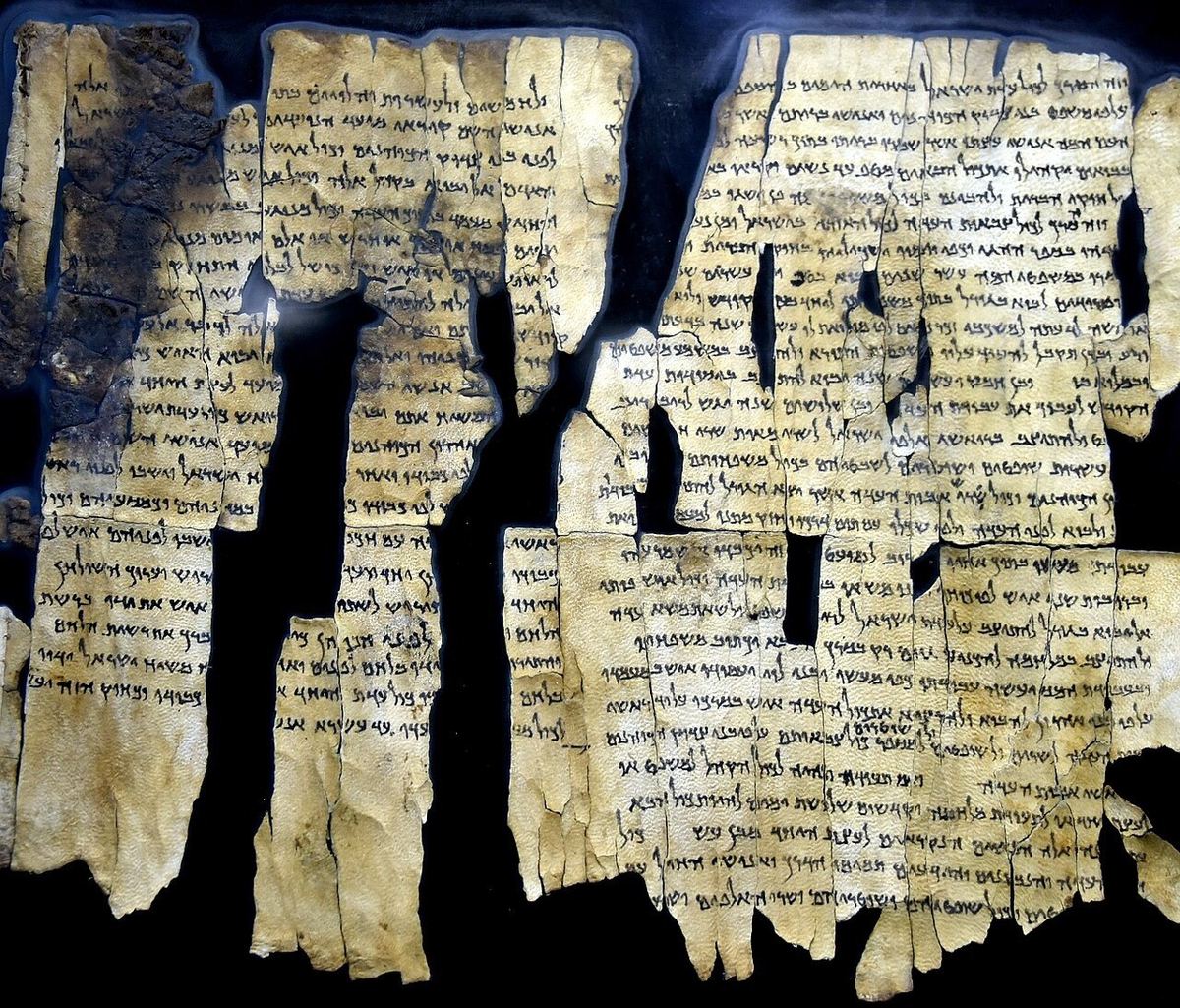
He asked to take the scrolls for examination, promised the dealer an answer within two days, and returned to Jerusalem with the sheets wrapped in paper.
That evening he searched his books for parallels and consulted colleagues at the university. None recognized the texts. At home, he sat down with the scrolls again. A radio played in the next room. His younger son, Mattityahu, was listening to the broadcast from the United Nations General Assembly and called out every so often to tell his father what had been said. In one room the father moved from line to line through writing set down two thousand years before. In the other, the son followed a vote that would decide the country’s future.
After midnight there were shouts of celebration in the street. The proposal to establish a Jewish state had passed. Sukenik lingered for another moment over the sheets, then went out to join the celebrations. When he ran into two acquaintances in the crowd, he told them what he had brought back from Bethlehem.10
Within a few weeks Salahi’s three scrolls had passed to the Hebrew University: the Thanksgiving Hymns, the War of the Sons of Light against the Sons of Darkness, and another scroll of the Book of Isaiah. As the research progressed, it became clear what the cave had kept. There were copies of biblical books roughly a thousand years older than the complete Hebrew manuscripts known until then. Alongside them were texts no one had read since Second Temple times: hymns, commentaries, and rules governing the life of a community that had withdrawn to the desert.10
And no one yet knew that in another cave nearby a scroll was waiting that was not made of leather. It was made of copper, and it told no story. It listed, one by one, the places where treasure had been hidden.11
Author’s notes
8. Israel Antiquities Authority, “Discovery and Publication of the Scrolls,” on the meeting at the fence. Shamush, The Essenes, the Yaḥad and the Kibbutz, discussion 3, draws on Sukenik’s recollections and Yadin’s account of the family’s concern, his own silence and his father’s departure without telling anyone. Yadin describes himself at the time as an archaeology student and a member of the Haganah. Sukenik recounts Ohan’s fears on the journey. For the identification of Levon Ohan, who is sometimes incorrectly called by his father’s name, see Yana Tchekhanovets and Débora V. Ben-Ami, “Nasri and Levon Ohan, the Antiquities Dealers from Jerusalem,” Journal of the Society for Armenian Studies 29 (2023), 1–9. For the journey, see the author’s reference to Yadin, p. 19. For the letterforms and the visit to the shop on 27 November, see The Isaiah Scroll, DJD XXXII, part 2, p. 13, citing Yadin, The Message of the Scrolls, p. 18.
9. Shamush, ibid., for the account from the bus ride to the wrapping of the scrolls in paper. The diary quotation is attributed to Sukenik on the Israel Antiquities Authority site and was checked against the transcript “Judean Desert Scrolls” on CET’s Tarbut.il. The Hebrew form used in the book follows the Academy of the Hebrew Language’s spelling for “unroll”; some editions print a different spelling.
10. Shamush, ibid., on the reading at home, Mattityahu at the radio and the celebrations after the partition vote. For the acquisition dates, see Eshel, Leqet ve-Olelot shel Megillot, pp. 20–21: two scrolls on 29 November 1947 and the Isaiah Scroll on 22 December 1947. The Israel Museum booklet compares complete Hebrew manuscripts; earlier fragments, such as the Nash Papyrus, also exist.
11. For the discovery of the Copper Scroll, see note 12 in the book.
Opening of chapter one
Jerusalem, April 1911
In the spring of 1911, a report from Jerusalem stirred Constantinople, London and New York: foreigners had been digging at night beneath one of the holiest places in the world. In one version of the story, the secret came out only because there was nowhere left to sleep in a house in the city.
The guard could hear the children in his house from the alley. It was the time of the Nabi Musa festivities. Muslim pilgrims had gathered in Jerusalem on their way to the Judean Desert, to the place where their tradition holds that Moses was buried. The guard’s relatives had come to town for the festival, too. When he opened the door, the adults were still sitting after the meal. The smell of coffee hung in the room. A child squeezed between them to reach a piece of bread left on the tray. In one corner the dishes had already been cleared away and bedding laid out for the night. As long as everyone sat shoulder to shoulder, they could squeeze a little closer and make room for another person at the meal. Now that they wanted to lie down, there was not enough room for everyone on the floor. To reach the corner where he usually slept, the guard would have to step over a guest already asleep.
He did not want to wake him. He went quietly outside and closed the door behind him. Most nights he stood guard on the Temple Mount. He was off duty that night, but he knew a quiet spot in the precinct where he could sleep until morning.1
The sounds of the house followed him down the alley. At midnight he reached the open precinct on the Mount. Here all he heard were his own footsteps. In his usual spot he folded the hem of his garment, lay down and rested his head on it. The cold rose from the stone and passed through the cloth. He turned on his side, trying to get comfortable. Then came a knock.
At first he stayed where he was. The sound was muffled and brief, and if the night had not been so quiet he might not have heard it. When it came again he lifted his head from the stone. He waited. Another blow, at the same interval. The guard got to his feet. He took a few steps, stopped to listen, then went on. The sound grew louder as he approached the Dome of the Rock. Light shone from the building. People were working there, in the middle of the night, in the place he had guarded night after night. At home, he had taken care not to wake his guests. When he saw the diggers, he ran for help.1
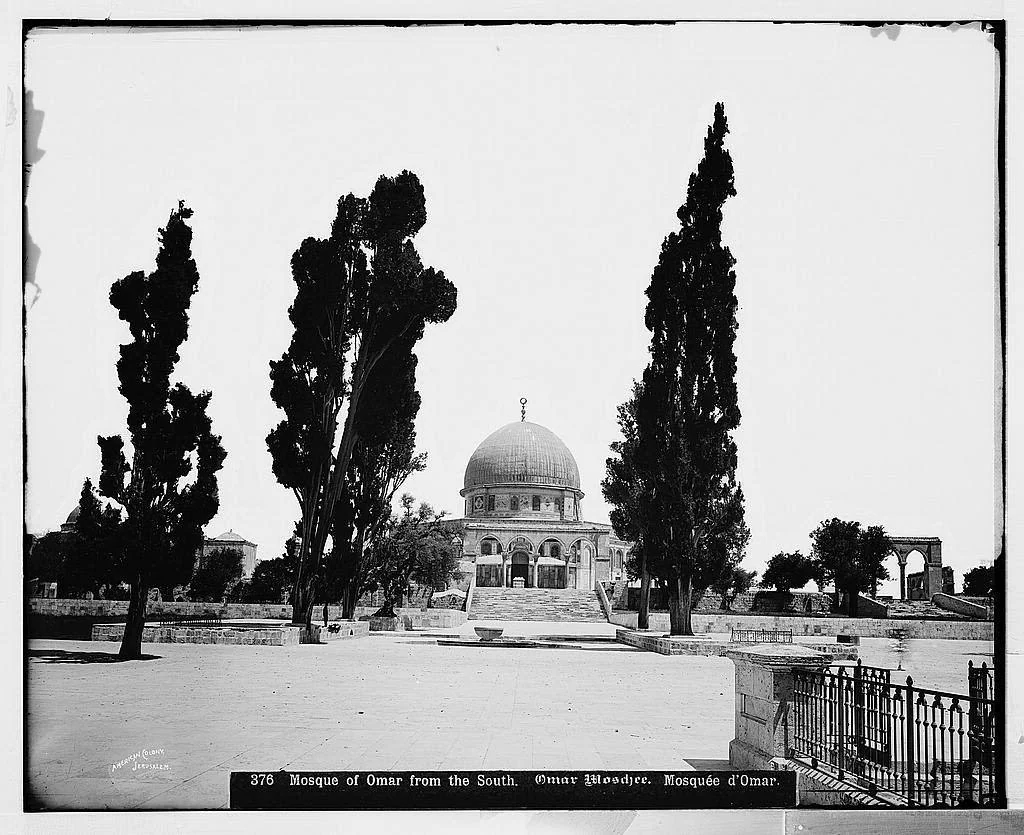
Bertha Spafford Vester lived in Jerusalem then. She was the daughter of the founders of the American Colony, a community of American and Swedish Christians who had settled in the city. In her memoir she explained why the guard had returned to the Mount at midnight: his house was full of guests. The Jerusalem newspaper HaHerut offered another version. In its account, only about ten days after the excavators had left town did a man go to the mufti, one of the city’s Muslim religious leaders, and say that he had seen people leaving the mosque with sacks on their backs. What was in the sacks? The man did not say.1
In the days that followed, shops closed and residents gathered outside the Saraya, the Ottoman government building. When Jerusalem’s governor, Azmi Bey, came out to receive pilgrims returning from the Nabi Musa festivities, shouts and curses met him and he withdrew. The city gates were his responsibility. Sheikh Khalil, who was in charge of guarding the compound, had men of his own. How had foreigners got past all of them? By then the rumor had traveled from the city to the coast, and from the coast across the sea.2
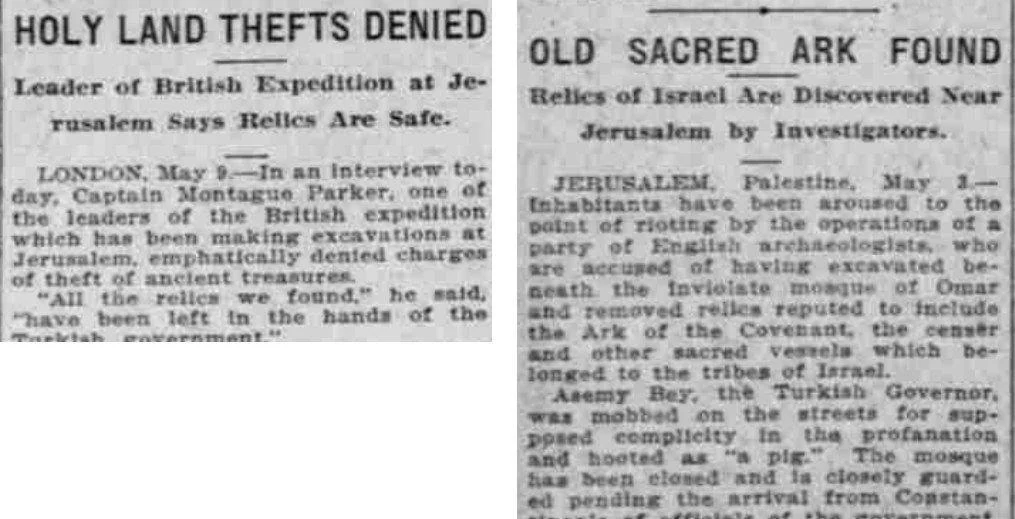
On 4 May a headline in The New York Times announced that the excavators had made off with Solomon’s treasure. The stories people passed from mouth to mouth mentioned the king’s crown, his ring and even the tablets of the covenant. In Jerusalem people were still looking for someone who had seen what was taken from the Mount. In New York the headline already said whose treasure it was.3
Author’s notes
1. Bertha Spafford Vester, Our Jerusalem, p. 179 in the author’s reference. Nirit Shalev-Khalifa, p. 132, also gives the account of the guard whose house was full. The holiday meal, children and sounds of digging are part of Lavi Fogel’s reconstruction. The movements around the tray, the coffee, the bedding and the feel of the stone are literary reconstruction. On hospitality and sleeping arrangements, see Mary Eliza Rogers, Domestic Life in Palestine. On Nabi Musa, see Vester’s recollections as quoted by Yara Nakhleh and the Yad Izhak Ben-Zvi record YBZ.0167.169. For the sacks, see HaHerut, 16 May 1911, p. 2. Gustaf Dalman gave a different explanation, involving a guard unhappy with his share of the payment.
2. Harold Satow, British consul in Jerusalem, to Gerard Lowther, dispatch 26, 21 April 1911, United Kingdom National Archives, FO 195/2377, folios 110–112. On the protest and the city’s leadership, see also Louis Fishman, pp. 6–22.
3. “Gone With Treasure That Was Solomon’s,” The New York Times, 4 May 1911, p. 6. The headline is reproduced in Shalev-Khalifa, p. 132. For a comparison of reports about the spoils, see Shay Ben-Ari and the digitized newspapers cited in his article.
The book is currently in Hebrew only. An English edition is planned.
Continue exploring
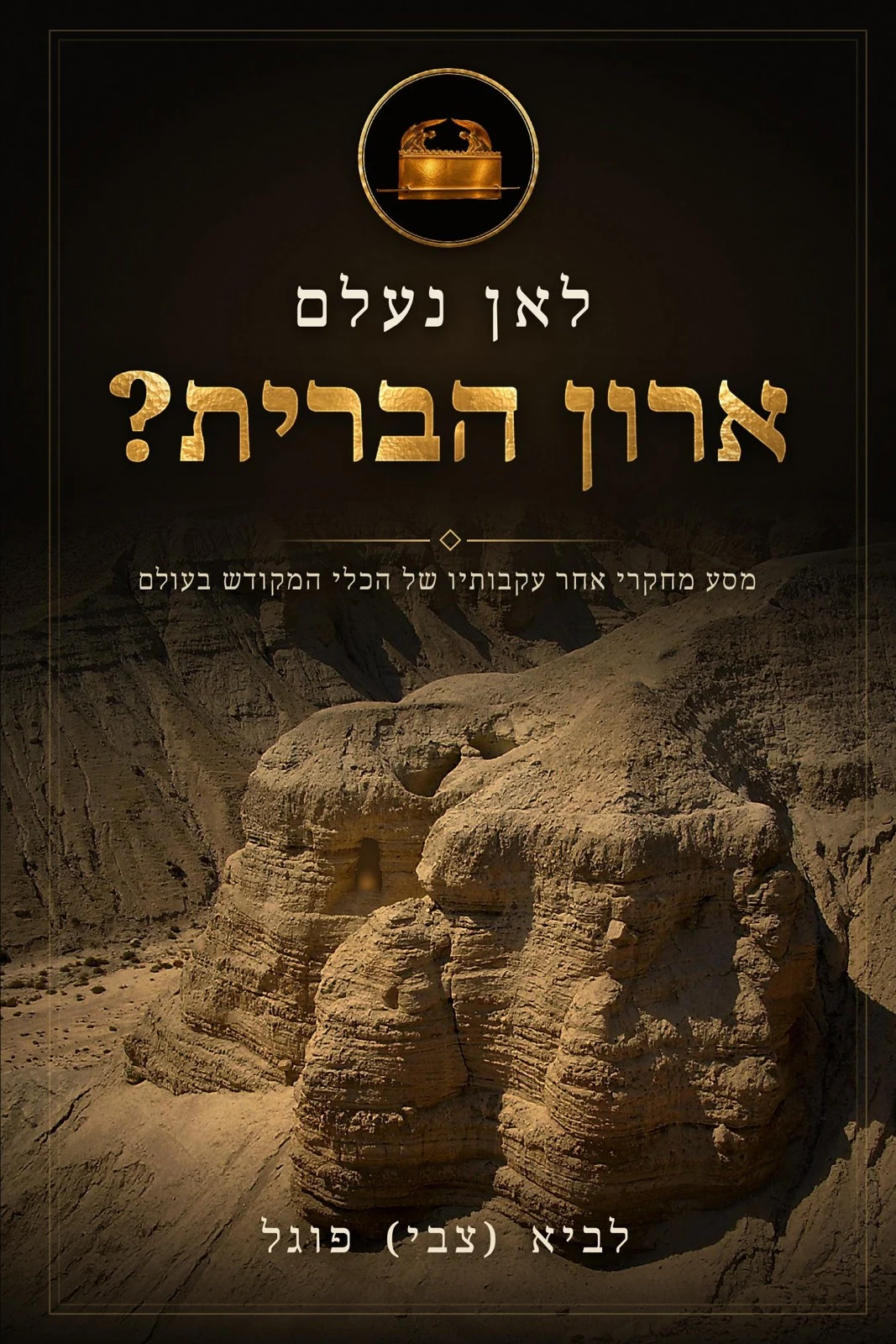
Where Did the Ark of the Covenant Go?
Explore Lavi Fogel’s book about the Ark of the Covenant. The 318-page Hebrew edition includes original maps, photographs and source notes.
Read the full storySearching for the Ark Beneath Jerusalem’s Temple Mount
A cipher, underground passages and a secret excavation exposed in the spring of 1911.
Read the full story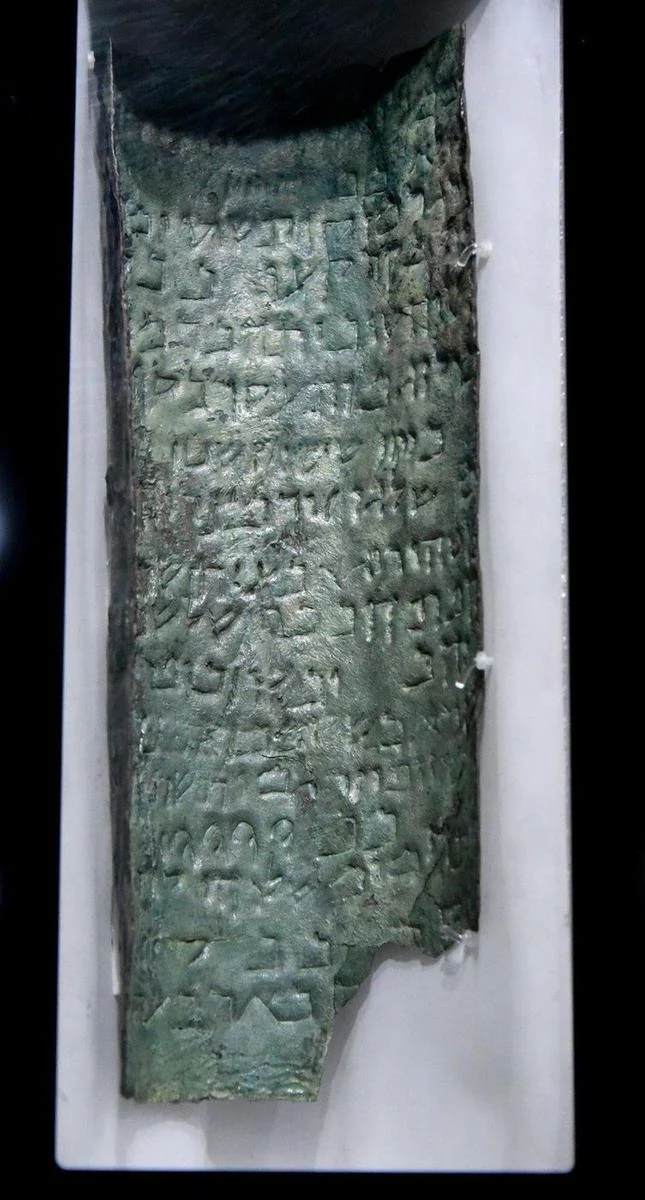
The Copper Scroll and the Search at Qumran
Two copper rolls, a list of buried treasure and the searchers who took it into the Judean Desert.
Read the full story